The Real Difference Between Tree Trimming and Pruning
Why Knowing the Difference Matters for Your Trees
I have spent enough years around trees to know that most people use the words "trimming" and "pruning" as if they mean the same thing. They do not. And if you care about the long-term health of the trees on your property, understanding the difference is more than just semantics. It can mean the difference between a tree that thrives for decades and one that slowly declines, or worse, becomes a hazard during a storm.
Let me walk you through what each term really means, when to do which, and how the two work together. I will also share a few practical things I have learned from working with trees in Volusia County, where sandy soil, humidity, and hurricane season all play a role in how trees grow and respond to cuts.
Tree Trimming: Shaping and Managing Growth
Tree trimming is mostly about aesthetics and clearance. When you trim a tree, you are cutting back branches that have grown too long, that hang over a roof, or that block a walkway. It is the kind of work that keeps a tree looking neat and keeps it from interfering with things around it. Trimming is often done on a regular schedule, maybe once a year or every other year, depending on the species and how fast it grows.
I have trimmed live oaks that were brushing against gutters, and I have trimmed gum trees that were drooping low over a driveway. The goal is not to change the tree's natural shape completely, but to guide it so it fits the space it shares with people. Good trimming respects the tree's structure. A bad trim job, on the other hand, can leave a tree looking like it got a bad haircut, with stubs and uneven growth that take years to correct.
What Trimming Accomplishes
- Keeps branches away from structures, power lines, and walkways
- Improves the overall shape and appearance of the tree
- Reduces wind resistance, which matters a lot in Florida
- Encourages denser foliage in areas that get more light after thinning
Pruning: Health, Structure, and Longevity
Pruning is different. It is not about how the tree looks from the street. It is about how the tree lives. Pruning targets dead wood, diseased limbs, crossing branches that rub against each other, and weak attachments that could fail. A proper pruning cut is made at a specific point, usually just outside the branch collar, so the tree can seal the wound naturally. A bad pruning cut, like a flush cut or a stub, leaves the tree open to decay and insects.
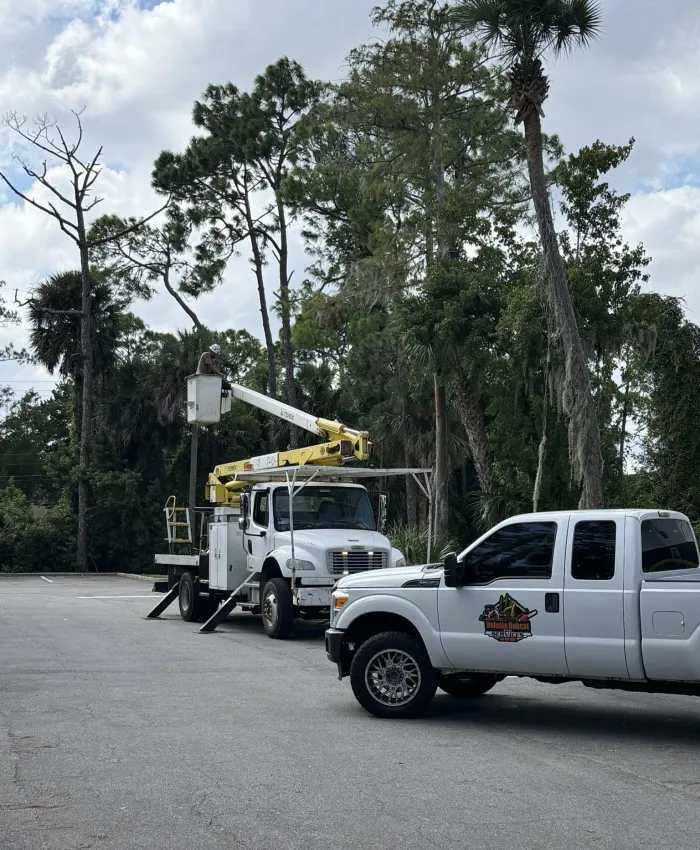
I remember a job where a homeowner wanted me to "trim" a large laurel oak that had a lot of dead wood in the canopy. What that tree really needed was pruning. We removed about a dozen dead limbs that were slowly rotting, and we cut out a few branches that were growing into each other. The tree looked almost the same from a distance, but it was structurally much sounder afterward. That is the difference between trimming and pruning. One changes the look. The other changes the health.
What Pruning Accomplishes
- Removes dead, dying, or diseased branches before they fall
- Corrects poor branch angles and reduces the risk of splitting
- Improves air circulation through the canopy, which reduces fungal issues
- Helps the tree allocate energy to healthy growth
How Tree Trimming and Pruning Work Together
In practice, the line between tree trimming and pruning is not always sharp. A good arborist will do both in the same visit. You might trim back the branches that hang over a fence while also pruning out the dead wood in the same tree. But understanding the difference helps you communicate what you actually want. If you call and ask for trimming, a professional might assume you care mainly about looks and clearance. If you ask for pruning, they will know you want the tree evaluated for health and safety.
This is where the phrase tree trimming and pruning comes into its own. It covers the full scope of what needs to happen to keep a tree both beautiful and sound. When I talk to property owners, I explain that tree trimming and pruning are two sides of the same coin. You cannot have a well-maintained tree without both. Trimming keeps it from taking over your yard. Pruning keeps it from falling apart in a storm.
Timing Matters More Than You Think
When you trim or prune matters. For many trees, the best time is during the dormant season, which in Florida is late winter, before the spring growth flush. The tree is less stressed, and you can see the branch structure clearly without leaves in the way. But there are exceptions. Some trees, like maples and birches, bleed sap heavily if pruned in late winter. And if you have a broken limb after a storm, you do not wait for the calendar. You deal with it right away.
I have also learned that pruning during active growth can be fine for certain species, as long as you are not removing too much at once. The general rule I follow is to never remove more than 25 percent of a tree's live canopy in a single year. More than that, and the tree can go into shock. It might push out weak, water-sprout growth that creates more problems down the road.
Common Mistakes I See
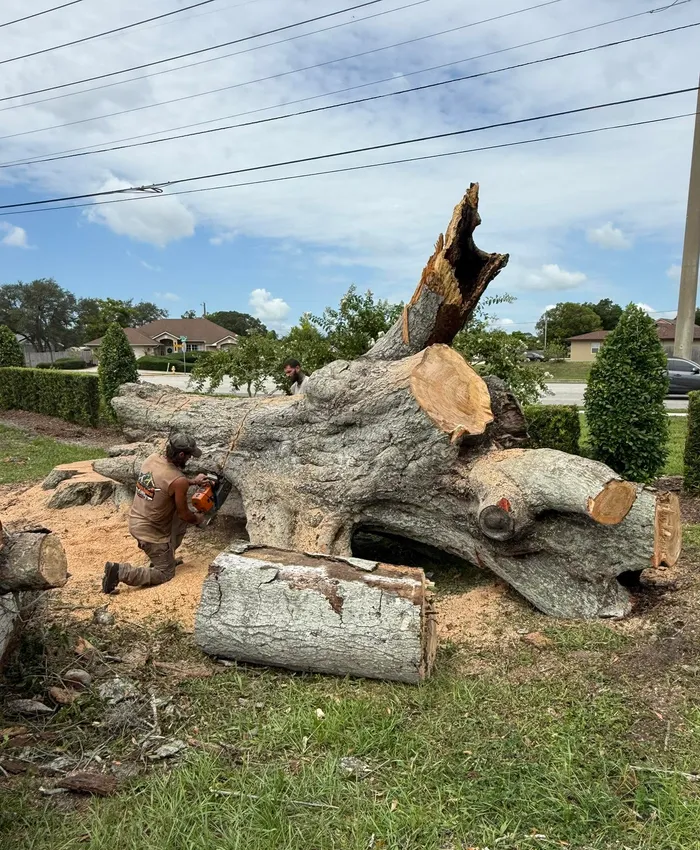
One mistake I see often is people topping their trees. Topping is when you cut the main trunk or large branches down to stubs. It is sometimes done to reduce the height of a tree, but it is one of the worst things you can do. The tree responds by sending up a lot of weak, fast-growing shoots that are poorly attached. Those shoots are exactly what break off in a hurricane. Topping also leaves large wounds that rot slowly from the inside. In my opinion, if a tree is too tall for its location, it is better to remove it and plant a smaller species than to top it.
Another common mistake is using wound paint or sealant on cuts. Years ago, people thought this helped the tree heal. Research has shown that it actually traps moisture and decay inside. Trees are good at compartmentalizing their own wounds if you make a clean cut at the right place. They do not need paint.
When to Call a Professional
There are things you can do yourself. If you have a small tree and a sharp pair of hand pruners, you can remove a dead branch or two. But once you need a ladder, a chainsaw, or work near a power line, it is time to call someone who does this for a living. Tree work is dangerous. Every year, people are seriously injured trying to cut branches that are too big or too high. A professional arborist carries insurance, knows how to rig ropes, and understands how a cut will affect the tree's balance.
I have also seen plenty of trees damaged by well-meaning homeowners who cut off a branch that was actually providing structural support. A tree is a living thing. Every cut has consequences. That is why I always recommend getting a consultation before doing major work, especially on large or old trees.
Final Thoughts
Understanding the difference between tree trimming and pruning is not just jargon. It helps you make better decisions for your property. Whether you are cleaning up after a storm, shaping a young tree, or maintaining a mature oak, knowing what you are doing and why makes all the difference. And when you do need help, look for someone who takes the time to explain what they are doing and why. That kind of care shows up in the results.
Volusia Bobcat & Tree Service, located at 210 Valencia Rd, DeBary, FL 32713, can be reached at +1 386-675-7898 for professional tree removal, trimming, stump grinding, emergency services, and firewood sales in the Volusia County area.
Connect with us on YouTube.